
Articles
What Information Is Required for a Steel Sheet Cutting Order?

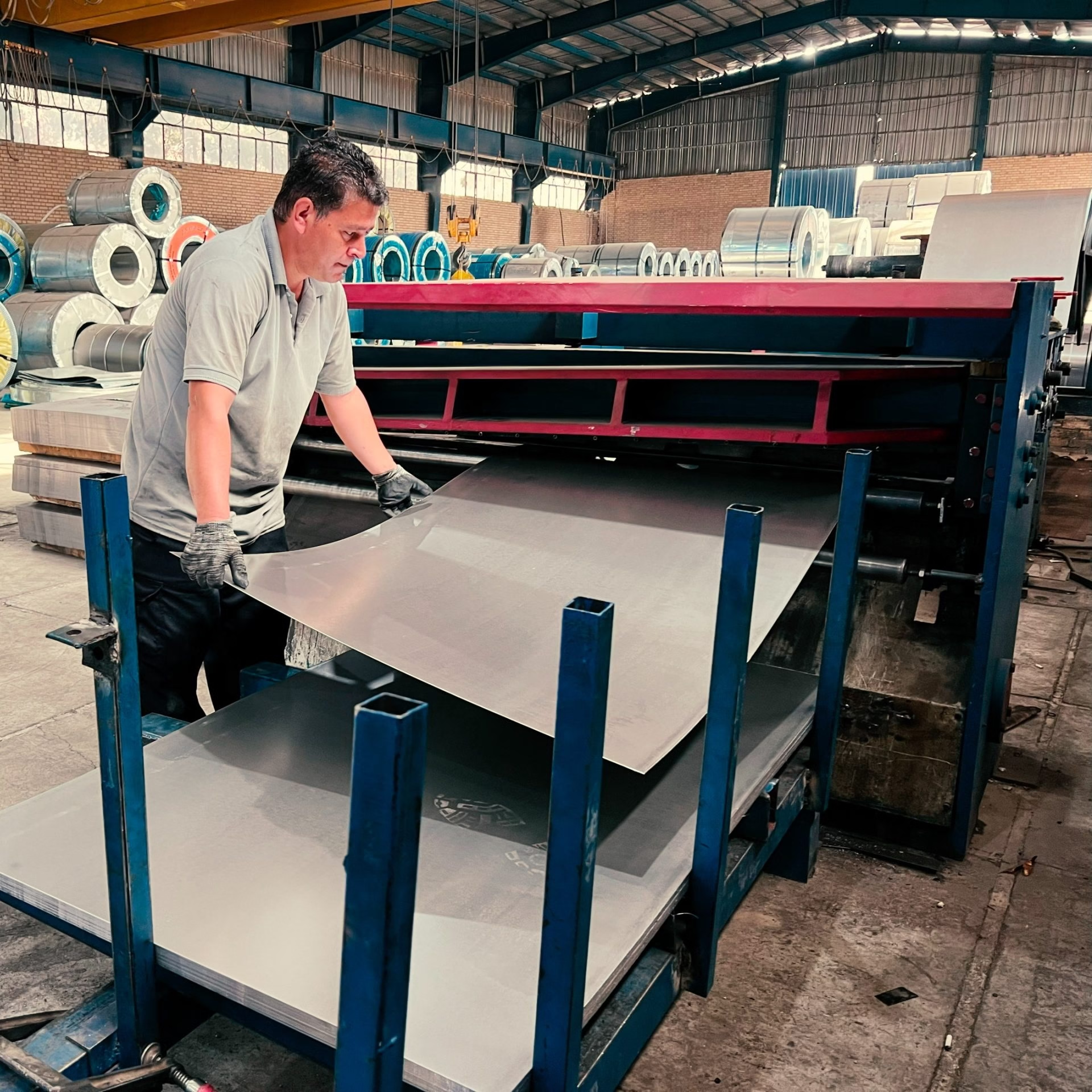
For a steel sheet cutting order, stating only the thickness and one finished dimension is not sufficient. The technical team needs the sheet material and grade, master-coil specifications, output form, dimensions and tolerances, edge and surface condition, quantity or weight for each line item, packaging method and delivery schedule. The clearer these data are at the outset, the fewer exchanges are required for feasibility review, process selection, time estimation and quotation.
Short answer: what is the minimum information required for a quotation?
- Material, grade and surface condition: The steel type, whether it is coated or uncoated, and its surface requirements.
- Input specifications: Thickness, width, weight of each coil and master-coil identification data.
- Output form: A narrower coil or strip for slitting, or flat sheet for cut-to-length processing.
- Output dimensions and tolerances: Strip width or sheet length, together with the required acceptance limits.
- Expected quality: Edge and burr condition, surface integrity, flatness or rewinding quality.
- Packaging and delivery: Line-item separation, labels, securing method, destination and delivery schedule.
If you are still deciding between the two processes, the guide to the difference between sheet slitting and cut-to-length processing explains the cutting direction, output form and application of each method separately.
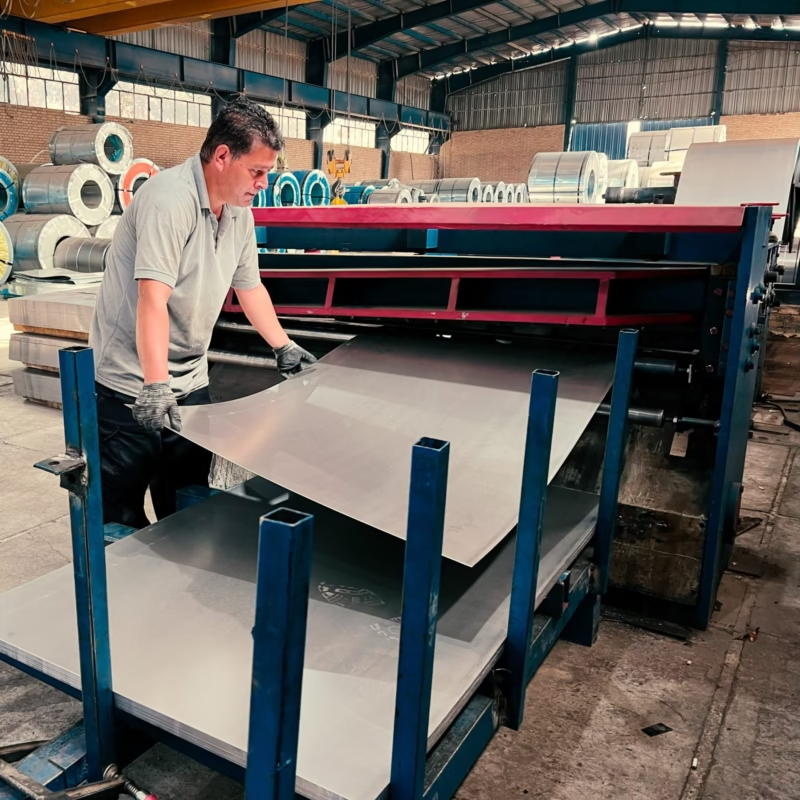
1. State the sheet material, grade and surface condition precisely
The general description “steel sheet” is not enough for a technical decision. Sheet grade and production condition, surface coating and appearance requirements can affect process feasibility, line settings, surface protection and packaging. In the request, state whether the sheet is hot-rolled, cold-rolled, galvanized or another type; if the surface or coating is sensitive for the end use, state that explicitly.
If a specification sheet, material certificate or coil label is available, attach a legible image or file to the request. This prevents different interpretations of a trade name or common sheet description. Market availability of a grade does not mean that it is automatically accepted on the cutting line; processing feasibility must be confirmed against the actual order specifications.
2. Record the master-coil specifications from its label
Master-coil thickness and width are the starting point, but the weight and identifier of each coil also matter for handling and production planning. If inside diameter, outside diameter or the preferred unwinding direction is a condition for your downstream process, record these as well. Distinguish estimated data from confirmed data by marking them “approximate.”
| What should be entered? | Why is it important? | |
|---|---|---|
| Material and grade | Exact material name and the available specification reference | Process-feasibility approval and quality control |
| Nominal thickness | The value shown on the coil label or document | Process selection and setup |
| Master-coil width | Actual or nominal input width | Cutting-layout and scrap review |
| Weight of each coil | Individual weight, not only total shipment weight | Handling, production and delivery planning |
| Coil identifier | Coil, heat or internal identification number | Traceability and batch separation |
| Surface and coating | Coating type, appearance sensitivity or protective film | Prevention of surface damage and packaging selection |
3. Do not confuse the required output with the process name
The best approach is to define the output form first and then name the process. If the master coil must become narrower coils or strips, the usual route is sheet slitting services. If the output must be flat sheet of a specified length, cut-to-length sheet services should be reviewed.
For orders in which both width and length change, the sequence of operations, intermediate product condition and packaging at each stage must be clarified before production. Merely writing “cut to custom dimensions” does not establish whether the output is coil or sheet, how many stages are required or what acceptance criterion applies to each stage.
4. Specify dimensions together with tolerances and the measurement basis
A nominal figure without an acceptance range can mean different things to the producer and buyer. For slitting, specify the width of each strip, the number of strips and the disposition of the remaining edges. For cut-to-length processing, state the length of each sheet, the quantity or weight of each line item and, where important, the squareness and flatness criteria.
Tolerances should not be guessed or copied from a previous order. The downstream application—such as forming, welding, pressing or entry into a continuous line—determines which dimension or characteristic is more critical. Committable limits are confirmed only after your requirement has been matched to the material and line capability.
5. Define edge, surface and product-form quality
- Edge: If burr level or edge direction matters to the next process, state the acceptance criterion.
- Surface: Declare sensitivity to scratches, stains, direct equipment contact or coating damage.
- Output coil: Where relevant, specify winding direction, line-item separation and the securing method for narrow coils.
- Output sheet: Explain requirements for flatness, squareness, stacking and protection between layers.
- Traceability: If mixing batches or master coils is prohibited, define the labeling method for each output.
6. State the order quantity separately for each output line item
Total project weight alone is not sufficient for planning. List every dimensional line item separately and give its quantity, approximate weight or delivery basis. If several master coils must be processed or delivered separately, preserve that separation in the order file. Acceptable scrap, head and tail material and remaining edge trim should also be agreed before work begins.
7. Treat packaging, labeling and the delivery schedule as part of the order
Output quality is not limited to the moment of cutting. Pallet or support type, edge protection, securing, moisture protection, stacking sequence and label information must suit the transport method and destination warehouse. If phased delivery, temporary storage or separation by project is required, record it in the plan from the beginning.
For orders in which storage before or after cutting is part of the process, the commercial-goods warehousing and storage services page explains the route for reviewing storage and delivery conditions.
Sample text form for a sheet-cutting request
Complete this table for every order line item. If a field is not yet final, enter “requires review” instead of omitting it so that the issue remains open during technical feasibility assessment.
| Your request data | |
|---|---|
| Material, grade and coating | … |
| Master-coil identifier and specifications | … |
| Output type: strip/coil or sheet | … |
| Dimensions and quantity of each line item | … |
| Tolerance and measurement basis | … |
| Edge, surface, flatness or winding conditions | … |
| Packaging, labeling and batch separation | … |
| Delivery location, window and phasing | … |
| Required control documents or reports | … |
What affects cost and lead-time estimates?
Each estimate depends on a combination of input material and specifications, number of dimensional line items, number of cuts, required tolerances and quality, line preparation, coil handling, packaging type, requested controls and delivery schedule. A general price quoted without reviewing the specifications can therefore be misleading.
To compare offers correctly, confirm that the service scope is the same in every quotation: are handling and loading, packaging, scrap, storage, control reports or phased delivery included in the price, or are they calculated separately?
Order control before production and at delivery
- Verify the input: Compare the coil label, material, thickness, width and visible condition with the request.
- Approve the work sheet: Confirm output line items, tolerances, packaging and separation rules before starting.
- Inspect the production start: Check the first output against the agreed criteria and record the result.
- Maintain traceability: Preserve the link between each output, its master coil and the order batch throughout the process.
- Perform final control: Check dimensions, quantity or weight, visible condition, packaging and labels before delivery.
Common mistakes in sheet-cutting service enquiries
- Stating only the finished dimensions without the master-coil specifications and grade.
- Interchanging the names slitting and cut-to-length without describing the output form.
- Giving a nominal dimension without a tolerance or acceptance criterion.
- Ignoring surface sensitivity, burr direction or downstream-process requirements.
- Combining several dimensional line items into one total weight without defining each line item’s share.
- Postponing packaging, labeling and phased-delivery decisions until production has ended.
How to submit a request to the Ghafari cutting and warehousing facility
First complete this checklist for every line item. Then, according to the output form, continue to the slitting or cut-to-length page. An overview of the cutting and storage infrastructure and cooperation routes is also available on the Ghafari sheet-cutting and warehousing services page.
The acceptable range, committable tolerance, time and cost are confirmed only after the actual order specifications have been reviewed. This guide does not replace technical feasibility assessment or final approval by the production team.
Download the steel sheet cutting order checklist
Download the fillable PDF version of this guide and record each order’s information in a structured form before sending it for technical review.
Frequently asked questions about steel sheet cutting orders
Is total order weight sufficient for an initial quotation?
No. Total weight must be linked to the input-coil specifications and output line items. Material and thickness, dimensions, number of cuts, tolerances, packaging and delivery schedule also affect feasibility and estimation.
What if the required tolerance is not known?
Explain the downstream application and the limitations of the customer’s equipment, and mark the tolerance field “requires review.” The committable limit should be determined in a technical discussion; guessing an unnecessarily strict figure can add avoidable cost or complexity.
Is slitting used for narrow-coil output?
Under the common definition, yes. Slitting divides a master coil in the direction of sheet travel into narrower strips or coils. Input specifications and output widths must be reviewed to confirm process feasibility.
Which service is required for flat sheet of a specified length?
This output is generally produced by cut-to-length or transverse coil cutting. Length, quantity and tolerance—and, where important, sheet flatness and squareness—must be included in the order.
Can packaging be determined after production?
Preferably not. Output form, surface sensitivity, handling method, destination warehouse and batch separation affect stacking, protection, securing and labeling, and should be clarified before production.
A reviewable order starts with the actual input specifications and defines the output, tolerances, quality, packaging and delivery in measurable terms. To proceed, complete the information table in this guide and submit it through the relevant service route for technical review.