
Articles
Galvanized Steel Coil Slitting: Process, Applications and Order Data

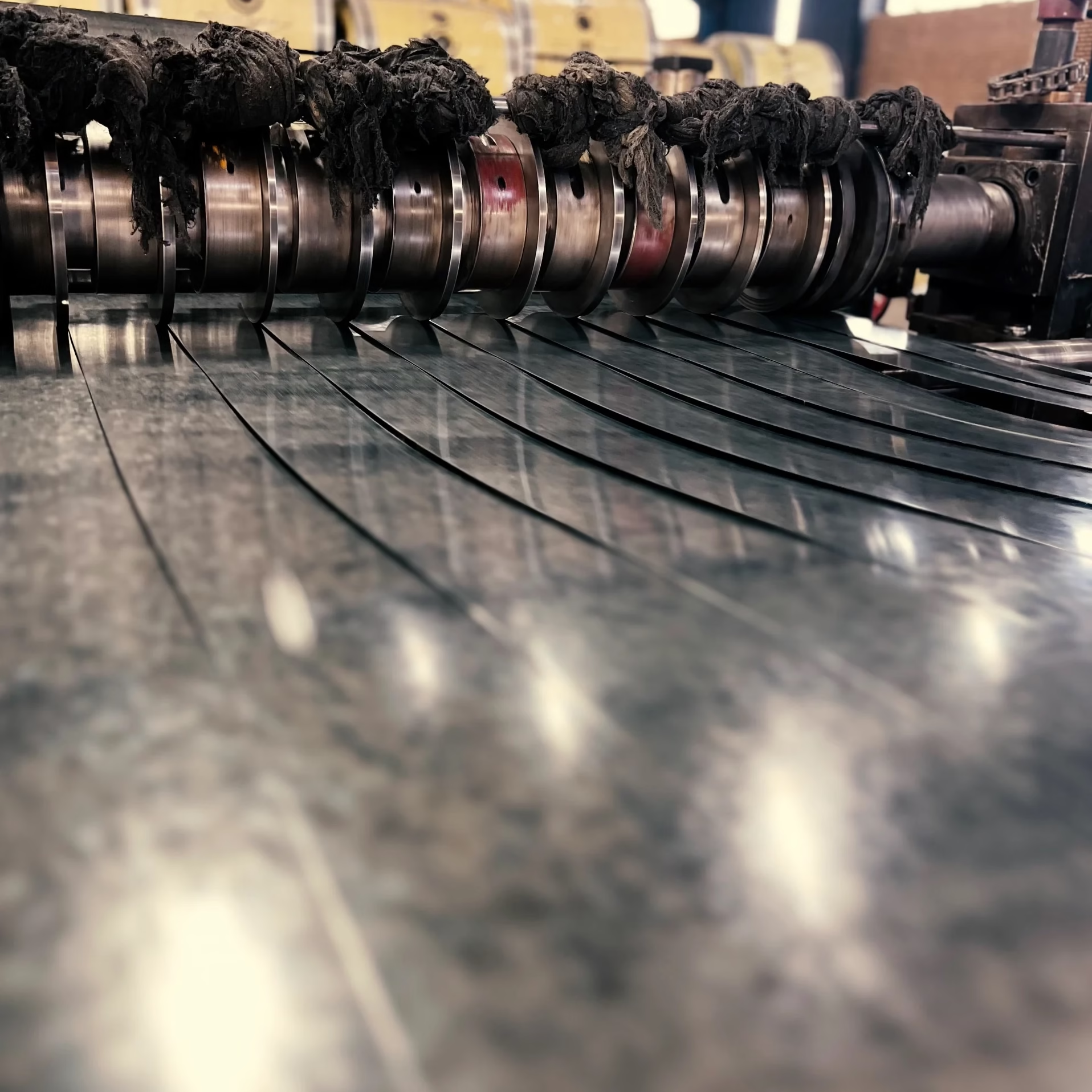
Galvanized steel coil slitting is a process in which a zinc-coated master coil is cut lengthwise into narrower strips or coils of specified width. The task is not limited to cutting the sheet: finished width, edge consistency, burr, coating integrity and the winding form of the output coils must be controlled for the next application.
This guide is intended for purchasing, production and quality-control teams so they can prepare the required information before requesting a quotation and distinguish slitting from cut-to-length processing. The acceptable range for each order must be determined from the actual coil specifications and confirmed by the technical team.
What is galvanized steel coil slitting?
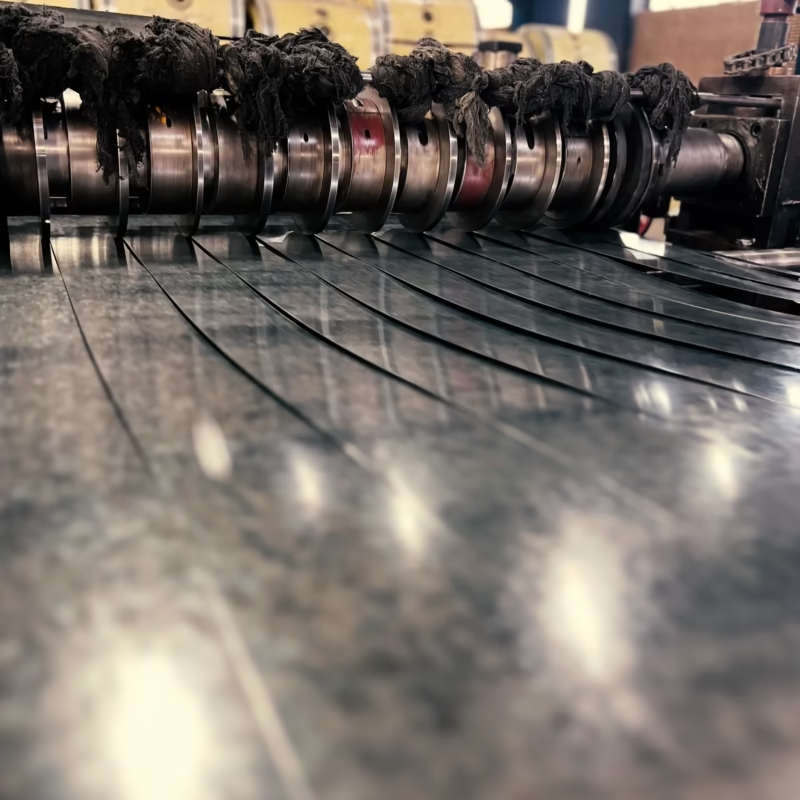
Galvanized sheet is steel sheet coated with zinc to improve corrosion resistance. During slitting, the coil is unwound, passed through a set of adjusted knives and divided into strips of specified width. Each strip is then rewound and secured for delivery according to the order.
The cut in slitting runs in the same direction as the length and travel of the coil. If the required product is flat sheet of a specified length, the appropriate process is cut-to-length or transverse coil cutting, not slitting.
Why does galvanized coil slitting require precise control?
- Protecting the coating: Improper contact, slipping or uncontrolled movement can scratch the coated surface.
- Controlling the edge: Knife condition and line setup affect burr, edge quality and strip performance in the next operation.
- Maintaining consistent width: Variation in strip width can disrupt downstream-machine settings and final-part dimensions.
- Rewinding the output coil: The coil must be wound evenly and remain stable for its method of use and transport.
- Packaging: Edges and coil surfaces need protection appropriate to handling and storage conditions.
Stages of galvanized coil slitting
- Receiving and inspecting the coil: Sheet type, thickness, width, weight, coating condition and visible initial damage are recorded.
- Designing the slitting pattern: Output-strip widths, strip quantities, possible edge trim and required tolerances are defined.
- Setting knives and spacers: Knife arrangement is set for material thickness, output widths and the specified edge criterion.
- Uncoiling and guiding: The sheet enters the cutting section with controlled tracking and tension.
- Slitting and rewinding: Output strips are separated and rewound according to the order.
- Inspection and packaging: Width, edge, surface, coil build and securing method are checked before delivery.
What specifications must be stated in the order?
| Why is it required? | |
|---|---|
| Sheet type, grade and coating condition | To assess process compatibility and surface criteria |
| Master-coil thickness and width | To design the slitting pattern and assess manufacturing feasibility |
| Output-strip widths and quantities | To determine knife arrangement and edge trim |
| Width tolerance and acceptable burr limit | To define dimensional and edge-inspection criteria |
| Master-coil weight and dimensions | To assess handling, uncoiling and coil securing |
| Required inner diameter or form of the output coil | To ensure compatibility with downstream equipment |
| Order quantity and packaging method | To plan production, delivery and surface protection |
Quality-control criteria for galvanized strip
Width and tolerance
State the nominal width together with the acceptable tolerance. If the part or downstream line is sensitive, phrases such as “accurate width” are not sufficient; the measurement criterion must be explicit.
Edge and burr
Evaluate the output edge against the requirements of the next operation. The acceptable burr limit and the sensitive side of the part, especially for forming operations or manual handling, must be defined before production.
Surface and coating integrity
Scratches, abrasion, contamination and coating damage must be controlled against the expected surface-quality level. If the appearance of the final product matters, record this requirement in the quotation request and when the master coil is delivered.
Rewinding quality
Even layer alignment, coil stability and proper securing are important for transport and use on the next line. Target weight and the intended use of the output coil affect the securing method.
Common applications of galvanized strip
Galvanized strip can be used as feedstock for continuous production lines and many components, including profiles and metal parts, component manufacturing, building equipment, ducting and certain industrial products. Grade, thickness, width and surface quality must match the downstream process and the service conditions of the finished product.
A galvanized coating alone does not make every strip suitable for every application. Base-material properties, coating type, subsequent forming, environmental conditions and drawing requirements must be assessed together.
Difference between galvanized coil slitting and cut-to-length processing
In slitting, the principal output dimension is the strip width, and the product is normally delivered as a narrow coil. In cut-to-length processing, the principal output dimension is the sheet length, and the product is delivered as flat sheet. The guide to slitting vs cut-to-length sheet processing compares the two processes in one table.
Packaging and storage of galvanized strip
- Coils must be secured so they cannot shift or unwind during transport.
- Cut edges must be protected for the coil weight and handling method.
- Direct contact between surfaces and handling tools must not scratch or deform the strip.
- Storage must be dry, clean and suitable for coated steel sheet.
- Each coil label should identify the order, width, material and a traceable reference.
Where should a galvanized slitting quotation request begin?
First collect the master-coil and required-output data listed in this guide. Then review Ghafari metal coil slitting services for service and quotation details. The overall sheet-processing and storage facilities are presented on the sheet cutting and warehousing services page.
Download the coil-slitting quotation checklist
Before requesting galvanized coil slitting, record the master-coil data, output widths, tolerances, coating sensitivity and packaging method in this fillable form.
Frequently asked questions about galvanized coil slitting
Does slitting damage the galvanized coating?
Cutting creates a fresh edge and mechanical contact can affect the surface. Proper line setup, controlled handling and suitable packaging can reduce unnecessary scratching and damage. The acceptable criterion must be agreed before production.
Are thickness and width sufficient for a quotation?
No. Sheet type and grade, coating condition, master-coil dimensions and weight, output-strip widths and quantities, tolerances, order quantity and packaging method are also required.
Can several different widths be produced from one coil?
A slitting pattern can technically include different widths, but final feasibility depends on master-coil width, knife arrangement, thickness, equipment limits, trim loss and order specifications and must be reviewed by the technical team.
What thicknesses can be processed for galvanized slitting?
The acceptable range depends on the equipment, coil width and weight, grade and output requirements. To avoid relying on an irrelevant generic range, submit the actual coil thickness and specifications for technical confirmation.
What is the difference between galvanized strip and galvanized steel packaging strapping?
“Galvanized strip” can be custom-width feedstock for many applications. “Galvanized steel packaging strapping” is a product designed to secure loads in industrial packaging, and its specifications must match the load, seal and strapping tool.
Galvanized coil slitting is more reliable when output width and tolerance, edge quality, surface sensitivity, coil form and packaging are clear from the beginning. Submit complete master-coil and required-output specifications for a manufacturing-feasibility review.